Buying Industrial Property Singapore: Understanding Normal BSD for Industrial Deals
Industrial property in Singapore can feel simple on paper and complicated in the details. The headline is familiar: you buy factories, warehouses, or strata industrial units that are tied to specific approved uses, often with lease terms, and you fund the purchase through some mix of cash and bank lending. The part that catches many first time buyers is the stamp duty stack. With industrial transactions, the “usual suspects” from residential buying do not map neatly across, and that changes how you plan your cash flow, pricing, and exit strategy.
This is a practical guide to what “normal BSD” really means in an industrial context, and why zoning and use quantum (especially for B1) should be treated as deal-critical, not “paperwork later.”
The stamp duty mindset: industrial is not residential
When people hear “stamp duty,” they often think of Additional Buyer’s Stamp Duty (ABSD) first. For industrial property, ABSD does not apply in the same way, because ABSD is a residential-oriented concept. IRAS states that industrial property is instead subject to normal BSD rules, and ABSD applies to residential property acquisitions.
That single point affects how you model the purchase.
If you are shopping for B1 industrial property Singapore or a strata industrial units Singapore setup, your comparison should not mirror residential buyer taxes line by line. For industrial acquisitions, you should plan around normal BSD and the rest of the transaction taxes that actually attach to industrial deals. ABSD is not part of the equation the way it is for residential, which can make industrial pricing appear “flatter” during negotiations.
Don’t forget the other side of the transaction: SSD on disposal
The cash flow story does not end when the keys are handed over. Seller’s Stamp Duty (SSD) can hit on disposal of industrial property, depending on how quickly you sell after purchase.
IRAS applies SSD to industrial property disposals based on holding period:
- 15% if sold within 1 year
- 10% if sold within 1 to 2 years
- 5% if sold within 2 to 3 years
- none after 3 years
In other words, if you buy industrial property Singapore with a “cycle trade” mindset, the holding period is not just a strategy choice. It is a cost parameter that can materially change your realized returns, especially if you are testing a market niche like light manufacturing, packaging, or logistics.
Understanding B1 industrial zoning before you even tour
A lot of buyers start from location and ramp access, then circle back to zoning later. That is backwards.
For B1 industrial zoning, URA describes its intent as mainly for clean industry, light industry, warehouses, public utilities and telecom uses. More importantly, URA’s B1 development control logic includes nuisance buffering. Uses that need a nuisance buffer of more than 50m are generally not allowed, while some general industrial uses may be considered case by case if buffer requirements are met.
This matters because your tenant plan, your own business plan, and even your fit-out assumptions depend on what is actually allowable under B1.
The B1 use quantum rule is the constraint people miss
URA also sets a use quantum requirement for B1 development or strata units: at least 60% of the floor area or GFA must be used for industrial purposes. The remaining area is limited to ancillary or supporting uses and approved secondary uses.
Practically, this means you should treat “industrial use” as the engine of the asset, not a label. If you intend to use the unit partly as a showroom, partly as office, partly as a workshop, or for mixed activity like e-business operations with some processing, the quantum and what counts as “industrial purposes” becomes the battleground.
If you are looking at a city-fringe industrial property Singapore location for a clean operator, or you are considering a deal that looks perfect for operations but has a lot of non-industrial space inside the unit, you could be stepping into a structural constraint.
B1 versus B2: why the difference shows up in the specs
B1 and B2 are not just alphabet labels. They imply different industrial intensity and, in the market, that often maps to the physical reality of the unit.
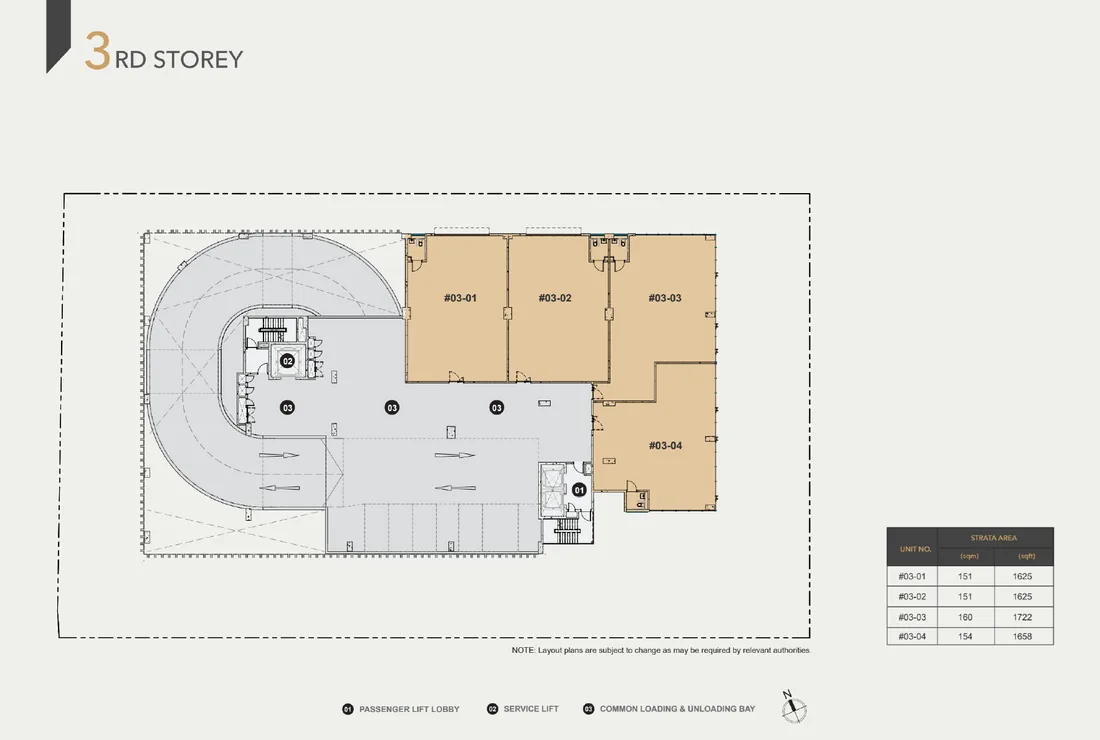
URA positions Space Nova 21 New Industrial Road B1 for clean and light uses with buffering logic. In contrast, B2 is the heavier-industrial category. JTC listings for B2 units commonly show different specs than B1 flatted factories, reflecting heavier use potential. In other words, if B1 is “clean and light,” B2 is “heavier,” and that can show up in things like building characteristics and suitability for industrial activity.
So when you hear “B1 vs B2 industrial zoning,” do not just treat it as a zoning trivia question. Treat it as an operational suitability question, and a leasing resilience question.
Leasehold reality: freehold industrial space is scarce
Freehold versus leasehold industrial Singapore is not just about who owns what, it changes your supply expectations and your exit options.
From JTC’s materials and unit pages, many industrial sites and units are leasehold with terms like 60-year, 30-year, or 20-year depending on the estate and product. That reflects how industrial supply is structured on land in Singapore, where much new industrial supply is on leasehold land.
As a result, freehold industrial property Singapore tends to be relatively scarce. When you find it, the scarcity can be priced in, and the buyer pool becomes narrower. You still need to check whether the unit’s allowed use and technical specs match your plan, but you also need to accept that scarcity can cut both ways: it may support demand, but it may also limit liquidity if your use is out of alignment.
Strata industrial units: the transaction is really about the building, not only the unit
Buying stratas changes the diligence style. With strata industrial units Singapore, your ability to operate, load, and run your workflow depends on technical checks and the building’s provision for industrial functions.
JTC highlights key technical checks for strata industrial units including floor loading, ceiling height, goods-lift access, loading-bay provision, and whether the trade matches the approved use.
Those are not “nice to know” items. They are the difference between a unit that can handle your goods today and a unit that becomes a renovation headache tomorrow.
If you have ever tried to install equipment based on a rough measurement, you understand why this is painful. A ceiling height mismatch can force you to relocate utilities. A goods-lift access shortfall can break a logistics schedule. Floor loading constraints can quietly cap the types of operations you can run without stress.
And then there is the zoning angle again: even if the unit is physically suitable, the trade has to match the approved use. That is why B1 industrial zoning is so foundational for light manufacturing, food packing or processing-related work, e-business related operations, printing or publishing, media, and similar clean uses described under B1 allowable uses.
Ramp-up factories and logistics fit: vehicle access is a business decision
Layout and access are not cosmetic. If you run operations that rely on inbound and outbound timing, ramp-up versus flatted factory access affects your productivity.
JTC describes ramp-up factories as having direct vehicular access to units for loading and unloading, while flatted factories are generally accessed via common corridors, lifts, and loading bays. That is a meaningful operational difference.
When buyers evaluate a light industrial space for sale Singapore, it is tempting to compare prices per square foot and stop there. But the operational cost of moving new launch industrial property Singapore goods through shared routes can show up in real delays and extra handling steps, especially if your business has frequent or time-sensitive movements.
If you are considering industrial property investment Singapore with an intended tenant profile, ramp-up factories can support tenants whose logistics workflows demand more direct access. Flatted factories can work well too, but the building access pattern becomes part of the rent negotiation, because operational convenience is tenant value.
City-fringe industrial property: why it attracts certain users
City-fringe industrial precincts like Tai Seng industrial property and Paya Lebar industrial property often get attention for e-commerce, light manufacturing, R&D and urban logistics. URA’s planning maps for B1 also show B1 industrial clusters around city-fringe MRT areas.
From an investment perspective, that alignment can be helpful. The asset’s approved use constraints and the building’s technical ability can fit the tenant’s operational needs, and the city-fringe location can support workforce catchments and transport links.
The key judgment call is whether your targeted business model matches B1’s “clean and light” direction and whether the unit’s technical provisions work for how that tenant moves goods and people.
“Normal BSD” in practice: what to model and what to verify
You should plan your cash outlay based on the reality that industrial acquisitions face normal BSD rules, not the residential ABSD approach. IRAS is explicit that industrial property is not subject to ABSD, and industrial transactions fall under normal BSD.
But “normal BSD” does not mean “simple.” You still need to confirm your transaction structure and the tax treatment that applies to the seller and the deal type. A detail like whether the seller is GST-registered can change the cash you need at completion.
GST on non-residential property purchases
IRAS states that if you buy a new non-residential property from a GST-registered seller or developer, GST is payable on the purchase. This means for buying industrial property Singapore from a developer or GST-registered party, GST cash planning belongs in the same spreadsheet as your BSD planning.
This is where first-time buyers sometimes get caught. They calculate stamp duty, then only later realize that the “purchase price” they saw in marketing material did not include GST when it should have. You do not want to be negotiating with a lender while scrambling for completion funds.
Buying under a company name: common, but think about your exit
Buyinging industrial property under company name is common for industrial assets used for business or held for investment. The stamp duty and disposal implications can depend on the structure of the transaction, and IRAS ABSD rules are residential-oriented, while industrial SSD rules can apply on disposal regardless of buyer profile where applicable.
That means, even if you are comfortable with a company structure for operational reasons, you still need to treat SSD on disposal as a real risk if you plan to sell within the SSD holding window.
If you are exploring industrial property investment Singapore and considering a medium-term holding, the holding duration rules can influence whether you prefer leasing out the unit to steady tenants, or whether you expect churn.
Financing: industrial lending runs on business assessment, not just “housing loan logic”
Industrial property loan Singapore decisions typically do not follow the residential playbook. MAS material and market practice indicate that financing for property investment depends on lender assessment, and non-residential loans are under commercial terms rather than residential housing loan rules.
In practice, this affects how banks look at your income, your business stability, and how they underwrite non-residential risk. It also affects your stress test when tenant demand softens.
So, while you can certainly obtain industrial property funding, you should expect underwriting questions that look more like business due diligence and less like a standard household mortgage flow.
Industrial property rental yield: higher can be possible, but liquidity is the trade-off
Industrial property rental yield can be higher than residential in some cases, but industrial resale liquidity is often more trade-specific. That sensitivity comes from the zoning and use quantum, lease structures, strata size, and building specs.
This is where your diligence has to be consistent. If you buy B1 industrial property Singapore for a specific tenant profile like clean manufacturing, packing, printing, media, or e-business-related uses, your future buyer pool may be similarly constrained. Liquidity depends on whether the unit remains useful to the next operator under the approved use.
If you are hoping to “upgrade” tenants over time, remember that approved use and operational fit are not optional. The unit’s value proposition must travel from one operator to the next without requiring zoning reinvention.
Putting it together for specific deal types
If you are considering a B1 industrial unit for light operations
B1 is intended mainly for clean and light industry. URA also implies restrictions where nuisance buffers exceed 50m. URA’s use quantum requirement means you need at least 60% industrial use within B1 developments or strata units, with the remaining area limited to ancillary or approved secondary uses.
That combination is why certain businesses line up naturally with B1. If your operation is compatible, B1 can be a strong fit. If your plan leans heavily toward non-industrial uses, it is easier to run into quantum or secondary use limitations.
If you are evaluating whether B1 is “enough” versus B2
If your operation is heavier-industrial in nature, B1 may not match your needs, even if you can make the unit physically work. B2 exists because it is built for heavier industrial intensity, and JTC listings show different specs commonly seen in B2 units compared to B1 flatted factories.
This affects both operating feasibility and tenant appeal. You want to avoid buying a unit where the zoning intention and your workflow are constantly at odds.
If you are targeting freehold industrial property Singapore
Because freehold industrial space is relatively scarce, a freehold deal can look attractive for long-term planning. But scarcity does not remove the need for technical and use checks. Even in a freehold setting, your operation still has to fit within the approved use constraints and your unit still needs to pass the practical checks like loading and access, especially for strata industrial units.
A short diligence checklist that prevents expensive surprises
When I work with buyers, the most effective diligence is not dramatic. It is disciplined, and it focuses on the few items that can break a deal’s logic.
- Confirm the approved use alignment for the unit, and if it is B1, treat the 60% industrial use quantum as deal critical.
- Check the B1 nuisance buffer constraint logic for your planned operations, and understand whether your process likely needs more than the general allowance.
- For strata industrial units, verify floor loading, ceiling height, goods-lift access, and loading-bay provision.
- Confirm whether the seller is GST-registered if the purchase is from a developer for a new non-residential property, so you can plan total completion funds.
- Model disposal costs with SSD timing, since industrial SSD applies based on holding period and can materially change your exit returns.
This checklist is intentionally short because too many buyers drown in information that does not move the needle. The above items are the ones that most directly connect zoning rules, technical reality, and cash outcomes.
How to think about location choices like Tai Seng and Paya Lebar
Tai Seng industrial property and Paya Lebar industrial property often attract users who need proximity to workforce catchments and transport links, which supports e-commerce, light manufacturing, R&D and urban logistics. Since URA’s B1 planning also shows industrial clusters around city-fringe MRT areas, B1 units in these areas can be a natural match for clean and light operations.
Still, “location match” is not the same as “compliance match.” A well-located unit can underperform if the trade does not align with approved uses or if the building access and loading setup does not match the tenant workflow. In a city-fringe setting, many buyers are tempted to assume that demand is broad. It can be strong, but it is not limitless. The unit must be operable for a specific class of users.
Final practical reality: industrial deals reward judgment, not just spreadsheets
Industrial property investment Singapore can make sense for owners who are comfortable marrying three things: legal allowances, physical build specs, and financial structure. The stamp duty angle is only one slice, but it is a crucial one because it changes how you price and structure your purchase.
Remember the core industrial tax framing: ABSD is not part of the industrial acquisition story, and industrial transactions sit under normal BSD rules. On disposal, seller’s stamp duty still matters for industrial property, with IRAS applying SSD based on holding period.
Then overlay zoning and operational fit. For B1 industrial zoning, URA’s intention is clean and light uses, the nuisance buffer logic is part of the constraint, and at least 60% of the floor area or GFA must be used for industrial purposes, with the balance limited to supporting and approved secondary uses.
If you keep those constraints in mind while evaluating ramp-up factories, strata industrial units, and city-fringe options like Tai Seng and Paya Lebar, you will spend less time arguing about “good value” and more time confirming whether the asset is truly runnable for the business you plan to operate or lease.
That is the difference between a unit you can buy, and a unit you can actually use and hold through the real world.